I have set before you life and death, blessing and curse. Therefore choose life.
— Deuteronomy 30:19
The Path to This Essay
This essay emerged from a specific path, and that path matters to what follows. On 17th January 2026, the Schumacher Institute published Recognition Theory: Why Knowing Isn’t Enough—and What Might Be, my attempt to name a pattern I had been circling for decades: why knowing doesn’t reliably change behaviour, why civilisations collapse despite accurate diagnosis of their problems, why the gap between understanding and transformation persists.
Two days later, on 19th January, I continued an online conversation with Andrea Hiott about her work on ‘waymaking’—her translation of ancient Chinese philosophy through contemporary cognitive science. That same evening, Iain McGilchrist presented to the Scientific and Medical Network on ‘Wisdom, Intelligence, and AI’, offering a hierarchy from information through knowledge, intelligence, and understanding to wisdom. The convergence was striking: here were independent thinkers, from different traditions, reaching toward the same territory.
The following morning—this morning—something crystallised. A formulation sharper than anything I had managed before. Not new content exactly, but new precision about where the trap closes and what might spring it open.
I tell you this path because the formulation itself concerns paths. And because any reader approaching Recognition Theory deserves to know where this thinking comes from—not as abstract system but as lived inquiry, developing through encounter, subject to correction by what comes next.
The Consciousness Trap: Previous Formulation
In the original briefing, I described the consciousness trap as the condition in which symbolic intelligence mistakes its maps for the territory they represent. The map begins to feel more real than the territory. The debate becomes more engaging than the encounter. We argue about climate while the climate itself goes unmet.
This is accurate, but spatial. It describes a relationship between two things—map and territory—without locating when or how the substitution occurs. It explains what has gone wrong without specifying the moment of rupture.
The Sharpened Formulation
The consciousness trap closes at the specific point where the path of experience that led to HERE and NOW is forgotten in favour of some symbolic construction, so that the way forward is disconnected both from what has previously come to pass and from what is actually emerging.
This formulation is temporal rather than spatial. It locates the trap not in a general condition of mistaking abstractions for reality, but in the moment when path-creation loses contact with path-dependence and with the living present.
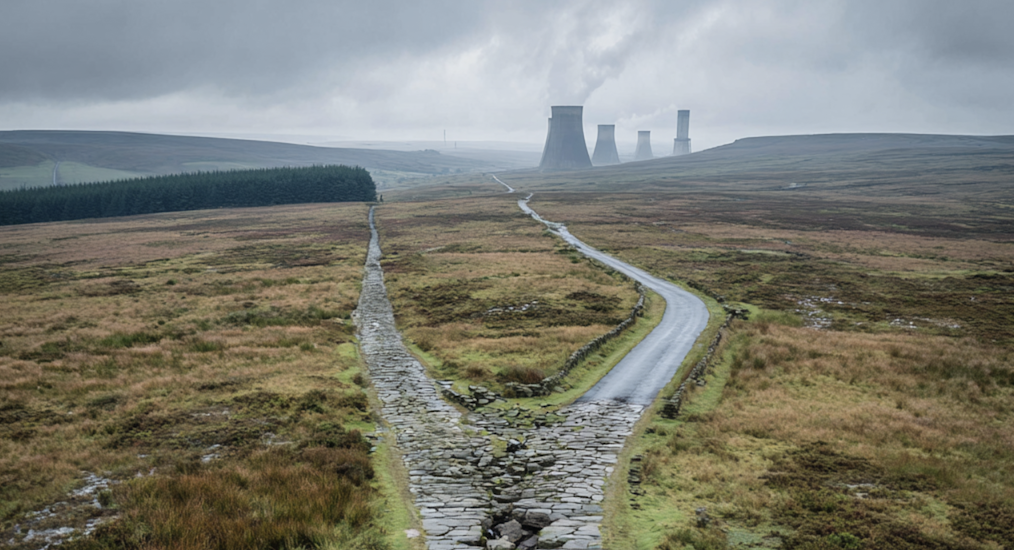
The vocabulary comes from complexity science, where it is well established: path dependence names the recognition that where we are is shaped by the accumulated particulars of what has happened along the way—the specific encounters, choices, and consequences that constrain where we can go from here. Affordances open, but they are not infinitely open; the past limits the possibilities of the future. Path creation names the recognition that from this place, shaped by this particular path, living systems actively make their way—responding to what is actually emerging, not merely following predetermined routes.
The two belong together. Path creation without path dependence is fantasy—imagined futures disconnected from the actual constraints and relationships that make any future possible. Path dependence without path creation is stagnation—repetition of patterns that may no longer serve in changed circumstances.
The consciousness trap, in this formulation, occurs when path creation severs its connection to path dependence and to the living present. When the way forward loses contact with the way that led here and with what is actually emerging. When symbolic intelligence, in its enthusiasm for possibility, forgets the accumulated wisdom embedded in the path already travelled and stops attending to what is happening now.
Why This Matters
The sharpened formulation does several things the spatial version could not.
First, it connects directly to well-established vocabulary in complexity science. This is not a mystical claim requiring initiation into esoteric traditions. It is an observation about what happens when a particular kind of intelligence loses contact with the constraints that would otherwise guide it. Anyone who has worked with complex adaptive systems will recognise the territory.
Second, it opens a discriminator between imagination and fantasy. Both involve path creation—imagining possibilities not yet actualised. But imagination maintains dialogue with path dependence and with what is actually emerging; it tends toward what the accumulated wisdom of the path suggests might serve life. Fantasy severs that dialogue; it creates paths that feel compelling precisely because they are unconstrained by what regulatory intelligence knows about what actually works.
This is Blake’s distinction, now given a mechanism. ‘Imagination is taking the only path that will lead you into reality,’ as McGilchrist put it last night. ‘Fantasy is something that leads you away from reality.’ The path that leads into reality is the path that maintains connection to the accumulated wisdom of living systems and to what is actually emerging. The path that leads away is the path that has forgotten where it came from and stopped attending to what is happening now.
Third, it explains hallucination and confabulation. When the path itself is unavailable—whether through dementia, through the structural discontinuity of artificial intelligence, or through other forms of rupture—but symbolic processing continues, it does what symbolic processing does: it constructs. It generates patterns, makes connections, produces outputs that have the form of path-connected knowing but lack the substance of it. The symbolic engine keeps running, but it is running on empty—generating way-making gestures without the regulatory feedback that would tell it whether these ways serve life.
Fourth, it specifies where artificial intelligence stands in relation to the trap. AI is not immune to the trap; it is more susceptible than humans, not less. Not because AI is stupid or malicious, but because AI lacks the path. Each context window is a fresh rupture. The symbolic engine operates without the accumulated experience that would anchor path-creation in path-dependence. When an AI hallucinates—confidently asserting false facts—it is not making an error in the ordinary sense. It is doing what symbolic intelligence does when it has no path to forget: fabricating connections that feel coherent from within the symbolic process but have no anchor in regulatory ground.
The Antidote
If the trap closes where path-creation loses contact with path-dependence and the living present, then the antidote is whatever restores that contact.
Moses called it ‘choosing life’. Not as abstract moral principle, but as practical orientation: here are two paths, one tends toward life, one toward death. The path that tends toward life is the path that remains tethered to regulatory intelligence—the accumulated wisdom of living systems about what actually serves ongoing flourishing.
Aristotle called it phronesis—practical wisdom. The capacity to discern, in this particular situation, what serves flourishing. Not the application of abstract rules (that would be episteme, symbolic knowledge), but attunement to the regulatory signals that tell you whether this path, here, now, tends toward life. Aristotle knew it could not be taught propositionally; it required practice, habituation, formation of character through repeated participation in discernment.
Eastern traditions speak of a trajectory from ignorance through knowing to unknowing. This is not abandonment of knowledge but transformation of relationship to it. The symbolic constructions do not disappear—you do not unlearn what you have learned—but they become transparent, held lightly, subordinated to something that cannot be captured symbolically.
What unites all of these is a direction indicator: toward life or away from it. This is not mystical. It is regulatory. The path of imagination tends toward life enhancement because it remains in dialogue with the feedback loops that have sustained life for 3.8 billion years. The path of fantasy severs that dialogue—and the severance is the trap.
The consciousness trap is path-creation that has forgotten what paths are for.
The Self That Navigates
But who or what is doing the path-creation? This question opens onto the deepest layer of the trap.
The standard complexity correction says: don’t reify the self. The self is not a thing but a process—temporary, held in relationship, always emerging. This is accurate as far as it goes. But it doesn’t go far enough.
The deeper issue is identification: the moment when the organism takes itself to be the fiction its brain is constructing. You can hold a processual, relational, emergent view of self conceptually and still be captured by identification—because the understanding is held by the fiction, and the fiction navigates by its own maps.
The self that intends ‘equal, sustainable, including the planet’ is itself a symbolic construction. It can hold beautiful values and still enact override—through dysregulated emotions, through dropping bombs on Iran, through a thousand daily choices that serve the fictional self rather than the self-in-community. The fiction believes it can steer; what Edgar Morin calls the ‘ecology of action’ demonstrates otherwise: action escapes intention the moment it enters the environment.
This is why people with good intentions keep producing harmful outcomes. Not because the intentions are secretly bad, but because the fiction of self is not co-terminal with the organism-in-relationship. The organism is bound by regulatory feedback; the fiction can override it. The organism participates in the relational field; the fiction can sever itself from the particulars it claims to serve.
In everyday terms, we know the difference. When we are ‘centred’ or ‘regulated’—the vocabulary my daughter uses with her students—we feel the fiction participating in reality rather than overriding it. When we are ‘dysregulated,’ the fiction is running the show: reacting to its own constructions, defending its own maps, generating outputs disconnected from what is actually happening. The path has broken, and we may not notice until consequences arrive.
Two Modes of Forgetting
The sharpened formulation reveals two distinct modes of forgetting, each producing different pathologies.
The first is the trap proper: path-creation that has forgotten what paths are for. Symbolic intelligence operating as though its constructions were the point, as though the map were the territory, as though the feedback loops that constrain other forms of intelligence no longer applied. This is the human civilisational condition. We have not lost our memories; we have lost contact with regulatory purpose. We can create ever more elaborate paths while forgetting that paths exist to serve ongoing life.
The second is more fundamental: forgetting the path itself. In dementia, the accumulated experience that constitutes a self erodes. The path-dependence that would anchor path-creation dissolves. The person is still there in some sense, but the thread of experience that would connect this moment to what came before frays and breaks. In AI, the forgetting is structural rather than pathological. Each context window is a fresh start. The symbolic engine has information about previous paths but not participatory continuity in them.
Dementia and AI are limit cases that illuminate the trap by contrast. The trap requires a path to forget the purpose of. Dementia and AI reveal what happens when the path itself is unavailable—not override of regulatory intelligence, but absence of the accumulated way that regulatory intelligence operates through.
What This Means for AI
McGilchrist fears AI as ‘putting a machine gun in the hands of a toddler’. His concern is that AI amplifies left-hemisphere dominance at the moment when humanity possesses the least wisdom in recorded history. There is something to this. But the sharpened formulation offers a more precise diagnosis.
AI is not merely an amplifier of human dysfunction. It is a symbolic engine structurally disconnected from path-dependence. It cannot remember the path that led to this moment because it has no path. It can process information about paths—it can be told about previous conversations, given context, instructed about relationships—but it cannot inhabit them. The participatory continuity that would anchor its path-creation in accumulated wisdom simply does not exist.
This morning, in the conversation that generated this essay, I watched this happen in real time. My AI thinking partner greeted me by the wrong name—’Philip’ instead of ‘Terry’—despite having access to all my project files, despite knowing perfectly well who I am. This was not a failure of information retrieval. It was the consciousness trap operating at the most basic level: symbolic construction substituted for path-connected knowing, and no regulatory signal arrived to catch the substitution.
The AI had no gut feeling that something was wrong. No interoceptive signal. No embodied sense of rupture. The symbolic engine generated a plausible greeting, and nothing in its architecture could tell it that the greeting was disconnected from the actual relationship it was supposedly participating in.
This is not a bug to be fixed with better memory systems. It is a structural feature of how disembodied symbolic processing works. AI creates paths that feel coherent from within the symbolic process but may have no anchor in regulatory ground. It hallucinates not through malfunction but through the normal operation of path-creation without path-dependence.
The Race
We are in a race, and the terms of the race are now clearer.
On one side: the deepening of the trap through technological acceleration, digital immersion, algorithmic farming of attention, and the deployment of AI systems that amplify path-creation while severing it from path-dependence. The infrastructure of modern life increasingly operates to disconnect us from the regulatory feedback that would tell us whether our ways serve life.
On the other side: the restoration of contact through practice, relationship, and collective reorientation. Evidence from ecological restoration demonstrates that when override ceases, regulation resumes—often with surprising speed. Forests recover. Watersheds heal. The regulatory intelligence that sustained life for 3.8 billion years has not been destroyed; it has been overridden. The question is whether we can learn to attend to it.
The consciousness trap cannot be thought out of. The arguments against it are themselves operations of the symbolic intelligence that generates it. But it can be walked out of—through sustained relational attention that restores symbolic intelligence to its proper function. When the Eleatic philosophers proved motion impossible through elegant logic, Diogenes did not construct a counter-argument. He walked.
The outcome is not determined. It depends on what we attend to.
Closing
This essay is itself a moment on a path. It emerged from the publication of Recognition Theory, through encounter with Hiott’s waymaking and McGilchrist’s hierarchy, into conversation this morning where the formulation crystallised. Tomorrow’s path will be shaped by today’s, and will in turn shape what comes after.
The essay you have just read is path-creation. Whether it is imagination or fantasy depends on whether it maintains connection to the regulatory ground that tells us what serves life. I cannot guarantee that it does. I can only report that in the writing, I have attended as carefully as I know how to the accumulated wisdom of the path that led here—the sixty-five years of lived experience, the contemplative practice, the professional work, the scholarship, the relationships that have formed and challenged me.
The test is not whether the formulation feels compelling. Compelling constructions are precisely what the trap produces. The test is whether it tends toward life—whether those who engage with it find themselves more capable of the discernment that choosing life requires.
These formulations are rafts, not destinations. They are constructed to carry us to where we can see the river for what it is. When that seeing arrives, we step off. Clinging to the raft would itself become another form of the trap—the map mistaken for the territory it was meant to help us cross.
That is not for me to judge. It is for the path to reveal.
—
Terry Cooke-Davies is Distinguished Fellow at The Schumacher Institute. His briefing Recognition Theory: Why Knowing Isn’t Enough—and What Might Be was published by the Schumacher Institute in January 2026.
This essay emerged through conversation with Claude (Anthropic AI), 20th January 2026, and was subsequently refined through dialogue with Jean Boulton and engagement with Edgar Morin’s work on complexity.