
Subject: Business and administrative studies

The Paradox of Control in Organizations

Business leaders are expected to be ‘in control’ of the situation in which their businesses find themselves. But how can organizational leaders and managers control matters entirely out of their hands; such as the next action a competitor takes, or the next law a government may pass? In this book, Philip Streatfield reflects on his own experience as a manager to explore the question: who, or what is ‘in control’ in an organization?

Read More


The Mythical Man-Month: Essays on Software Engineering

Few books on software project management have been as influential and timeless as The Mythical Man-Month. With a blend of software engineering facts and thought-provoking opinions, Fred Brooks offers insight for anyone managing complex projects. These essays draw from his experience as project manager for the IBM System/360 computer family and then for OS/360, its massive software system. Now, 20 years after the initial publication of his book, Brooks has revisited his original ideas and added new thoughts and advice, both for readers already familiar with his work and for readers discovering it for the first time.

Read More

The Management of Projects

This book provides a comprehensive survey of the issues involved in initiating, securing and accomplishing any project and will answer key questions, such as: How did the discipline grow? What do we mean by ‘project management’? What lessons have been learned – often painfully? And, how can past experiences be distilled into practical advice for those who wish to create and implement successful projects?”The management of projects” examines in detail, the experience gained, and lessons to be learned, from the management of projects over the past 50 years and will provide you with a record of the seminal events and documents in the development of the modern practice of the management of projects: a detailed picture of how project management is and has been practised in different industries, countries and cultures; a sense of the drama and excitement of the real world of projects; international perspective of the discipline; a model of best practice; and, a vision of how the discipline will evolve over the next decade or so.

Read More

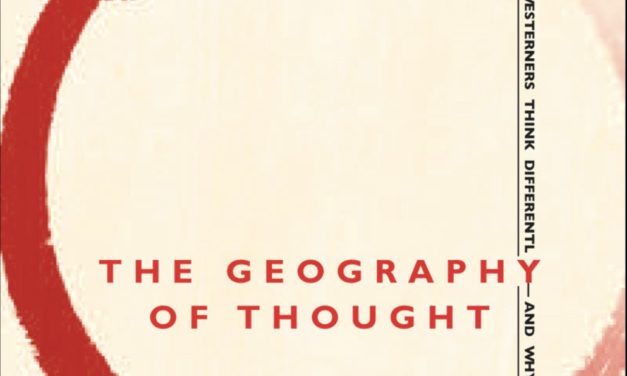
The Geography of Thought: How Asians and Westerners Think Differently — and Why

When Richard Nisbett showed an animated underwater scene to his American students, they zeroed in on a big fish swimming among smaller fish. Japanese subjects, on the other hand, made observations about the background environment…and the different “seeings” are a clue to profound underlying cognitive differences between Westerners and East Asians. As Professor Nisbett shows in The Geography of Thought people actually think – and even see – the world differently, because of differing ecologies, social structures, philosophies, and educational systems that date back to ancient Greece and China, and that have survived into the modern world.

Read More

The Difference: How the Power of Diversity Creates Better Groups, Firms, Schools, and Societies

In this landmark book, Scott Page redefines the way we understand ourselves in relation to one another. The Difference is about how we think in groups–and how our collective wisdom exceeds the sum of its parts. Why can teams of people find better solutions than brilliant individuals working alone? And why are the best group decisions and predictions those that draw upon the very qualities that make each of us unique? The answers lie in diversity–not what we look like outside, but what we look like within, our distinct tools and abilities.

Read More
Verified by MonsterInsights