Every year we return to this story — the angels, the shepherds, the stable, the star. And every year it risks becoming so familiar that we no longer see it.
But what if the Christmas story was never about something arriving from outside? What if it was always about recognition — humanity finally seeing what had been true all along?
Consider the elements we know so well:
A child born not in a palace but a stable. Recognition doesn’t come through the usual channels of power and prestige. It breaks through in the margins, in vulnerability, in what the world overlooks.
Shepherds on a hillside — people close to the land, to the rhythms of care and tending — are the first to recognise. Not the learned, not the powerful, but those already practiced in attentiveness.
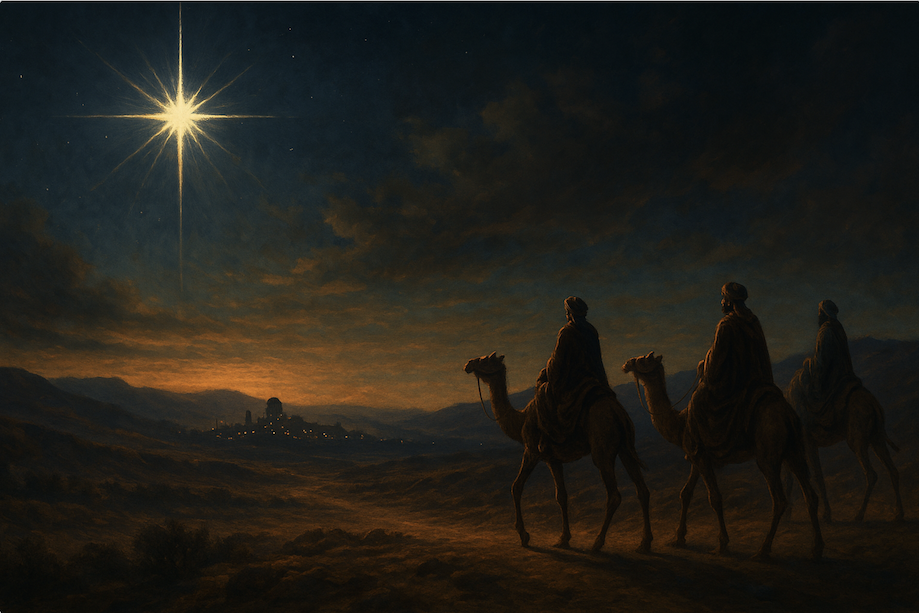
Wise men following a star — the long journey of seeking, of following signs, of being drawn toward something they couldn’t yet name but knew mattered.
And Mary, who “pondered all these things in her heart.” Not grasping, not proclaiming, but holding. The contemplative posture that allows recognition to deepen.
Emmanuel — “God with us.” Not God finally arriving, but God always already here, now recognised. The veil was on our side all along.
And that song the angels sang: “Peace on earth, goodwill to all.” Not a command or a hope for the future, but a declaration of what is — the very substrate on which all creation rests. Love and goodwill as the ground of being, waiting only to be seen.
The wonder remains. The worship remains. But perhaps what we’re celebrating isn’t a king coming to rule, but a recognition breaking through — in a particular life, in a particular place, of a reality as old as time itself.
And isn’t that what still happens? In moments of unexpected kindness. In the face of a stranger. In silence. In community gathered, even over coffee. The same recognition, still breaking through, still inviting us to see.
Glory to God in the highest, and on earth, peace.